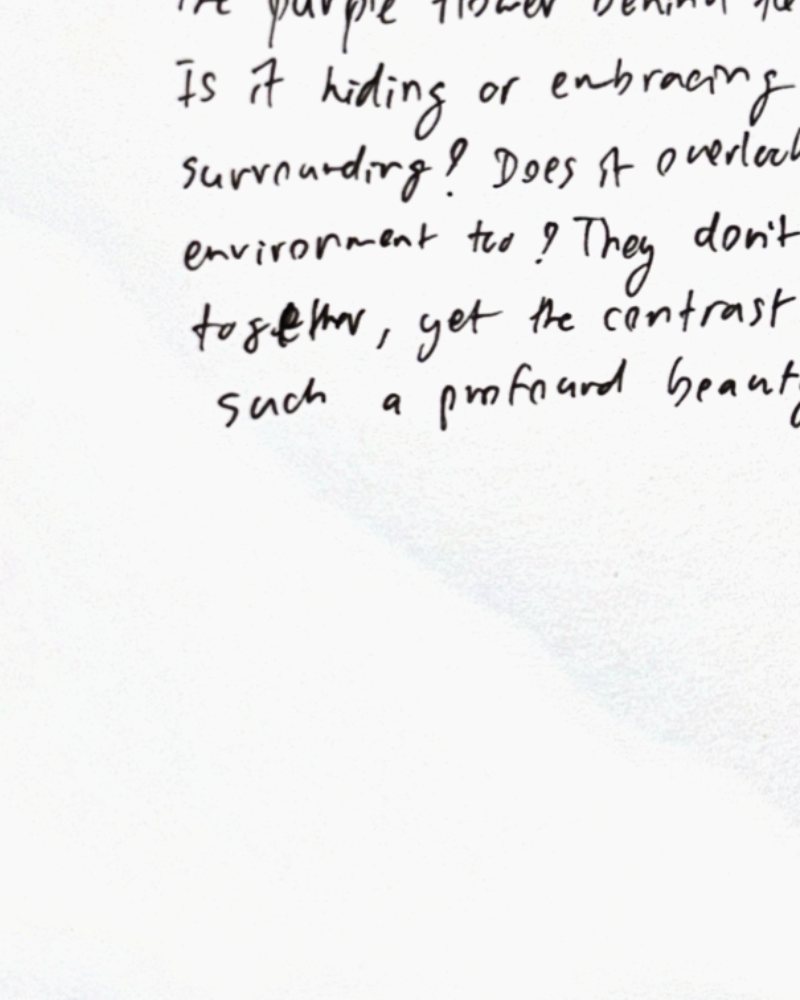
Atlas of Noticing
An autoethnographic experiment in positionality: what a Cambodian designer trained in advertising notices in a Belgian town, recorded by sketching, photographing and journaling, and what that noticing does to her research practice.
- Role
- Author, photographer and illustrator
- Where
- Genk and Diest, Belgium, autumn 2025; Design and Positionality module, LUCA School of Arts
- Methods
- Autoethnography; sketching, Polaroid photography and journaling; reflexive writing on positionality
- Outputs
- Atlas of Noticing (book, 2025) · Remembering as a Form of Meeting, Roots Literary Magazine, Issue 1 (October 2026) · When the Walls Spoke, Journal of Autoethnography (under review)
what was done
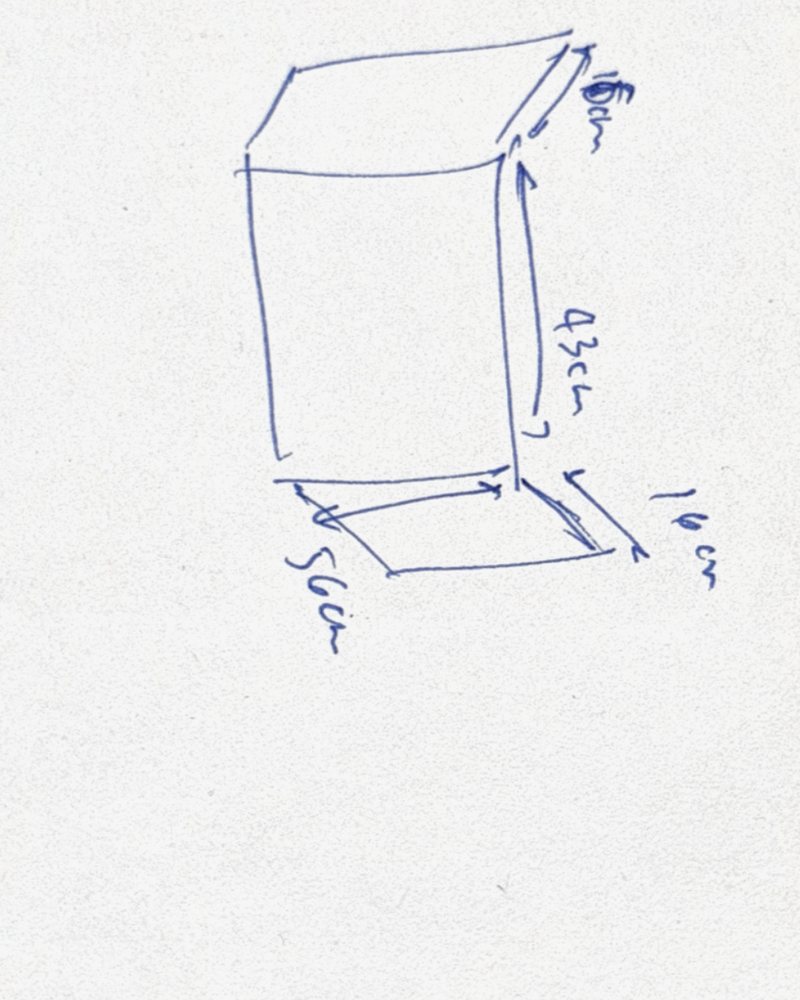
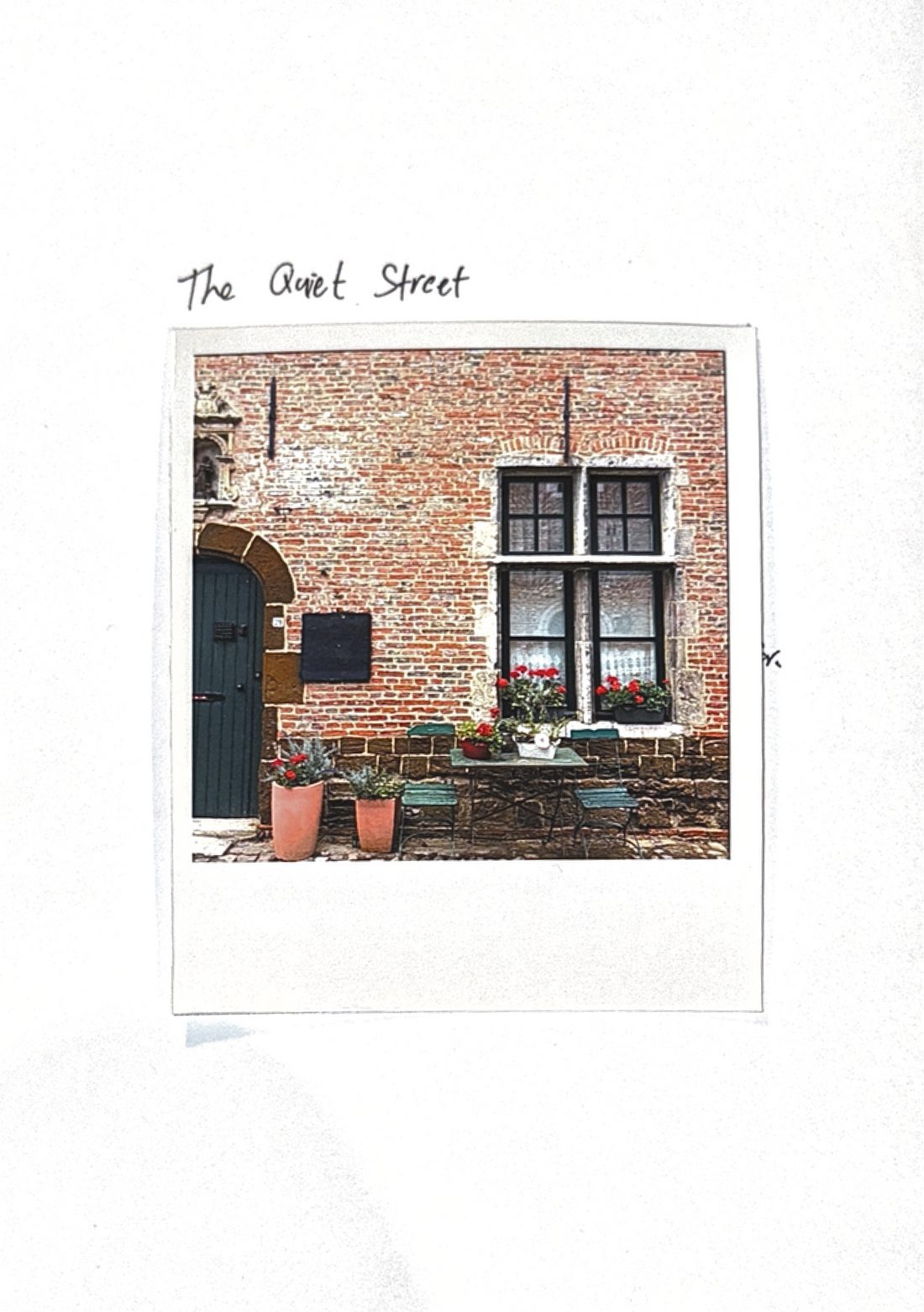
A book of sketches, photographs and journal entries made during the first months in Belgium, as a deliberate exercise in unlearning commercial advertising habits, attending to the hidden layers of public spaces, and reflecting on positionality as a Cambodian international student conducting research far from home. The same reflexive practice later underpins the positionality sections of the research papers.
what came out
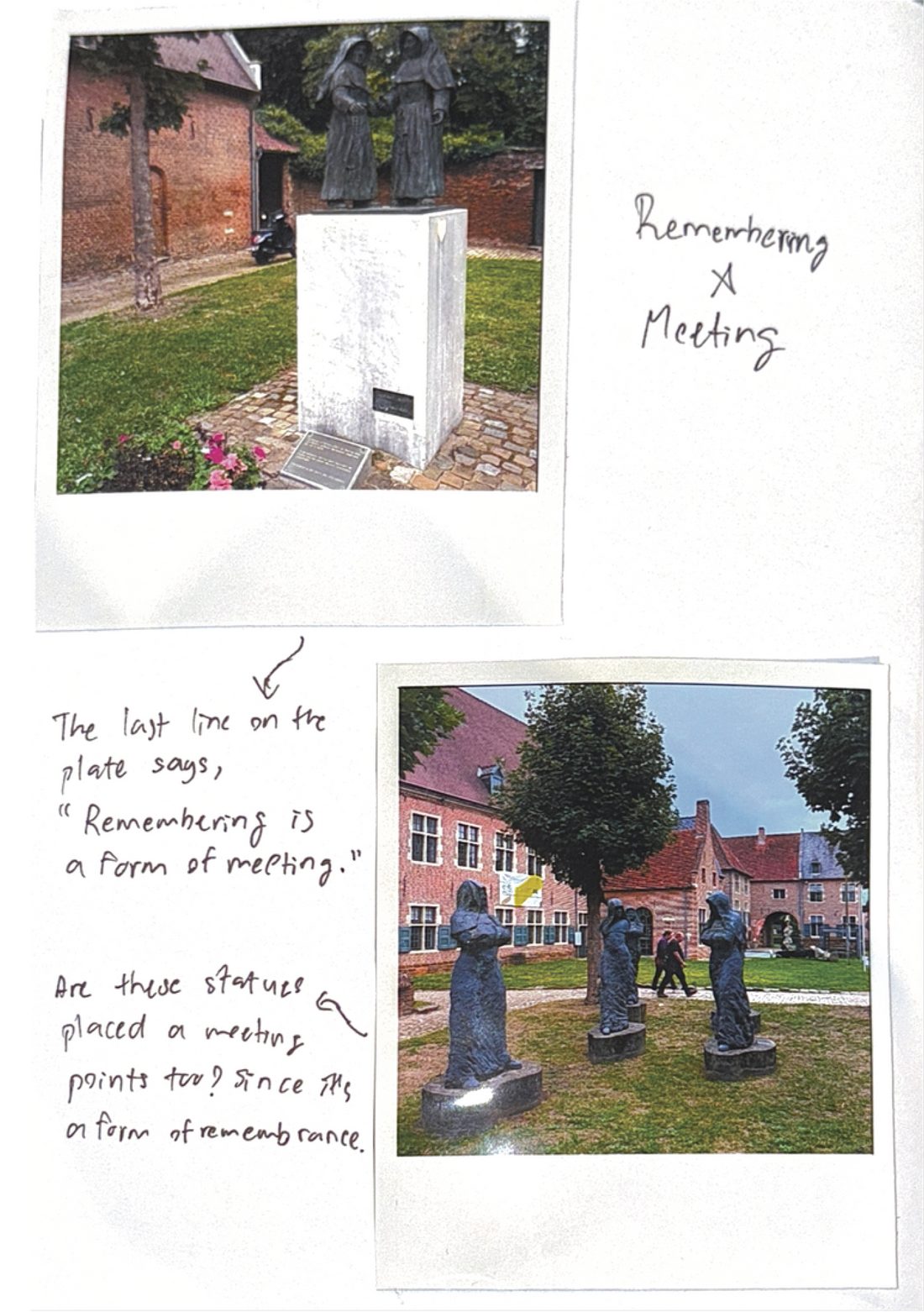
Remembering as a Form of Meeting: in Diest, two bronze statues stand under a plaque reading "Remembering is a form of meeting"; Polaroids and handwriting on connection across time through memory, care and the traces people leave. Published in Roots Literary Magazine, Issue 1, Birds of a Feather. A second autoethnography, When the Walls Spoke, on institutional failure of care and informal peer support in a European youth-training programme, is under peer review at the Journal of Autoethnography.